


Determining the optimal trial length for online services is a complex challenge, as it directly influences conversion rates and overall product success. My experience with Readwise revealed how extended trials can help users fully realize a product’s value and make informed decisions. This article explores strategies for designing trials that balance user discovery with business needs, focusing on trial length, natural usage patterns, and time to value realization.
Netflix famously ended its free trial offer in October 2020, a decision that surprised many at the time. For Netflix, this move made sense. By then, it had become well-established, and the costs of free trials likely outweighed the benefits of acquiring new subscribers.
Not every product, however, enjoys the same luxury. Many online services rely on free trials as a key customer acquisition strategy. These trials provide users with a risk-free way to explore products and aid their decision-making process.
Trial lengths are often standardized to periods like 7 days, 2 weeks, or a month. However, determining the optimal duration is far from trivial, as it directly influences conversion rates and a product’s overall success.
My recent experience with Readwise demonstrated how extended trial periods allow users to fully realize a product’s value. It also underscored the importance of designing trials that optimize ‘time to value realization’ by considering factors like trial length, natural usage patterns, and user engagement. In this article, I share my Readwise experience and explore strategies that influence trial duration.
What is Readwise?
Readwise helps users manage their highlights from various sources, such as the web, Kindle, and other reading platforms. It simplifies revisiting and retaining what you’ve read by leveraging spaced repetition, a technique that reinforces memory over time.
Additionally, Readwise offers a Reader app that centralizes all your reading materials. The two key features of Readwise are:
- Managing Highlights and Notes: Consolidating highlights from different sources in one place.
- Spaced Repetition via Daily Review Emails: Sending curated emails to help you review and retain your highlights over time.
My Trial Experience
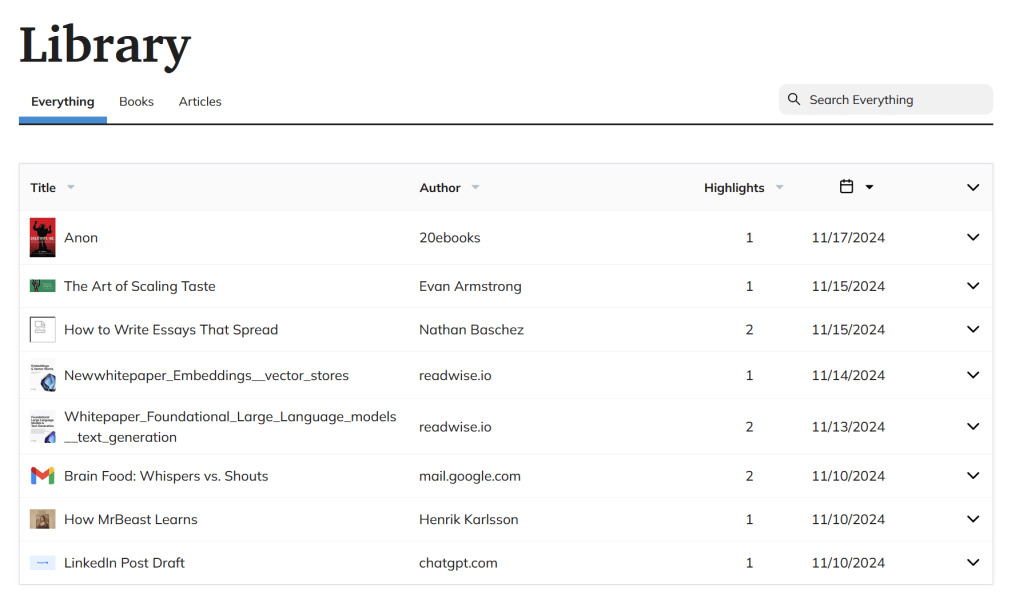
I was drawn to the idea of turning passive reading into active learning through spaced repetition and decided to give Readwise a try. Initially, I explored the Reader app, uploaded books and PDFs, and read a few pages. However, after a few days, I noticed no tangible benefits or changes in my reading habits. My enthusiasm waned, and I stopped using it altogether—it simply slipped my mind.
When my trial ended, I chose not to subscribe—I hadn’t used it enough to see its value. But then I received an email from the founder, asking for feedback and offering to extend my trial. The personal touch impressed me, and I decided to give it another shot.
During the second trial, I identified why Readwise hadn’t initially worked for me: I’m a “clean” reader—I don’t highlight or underline while reading. Instead, I take screenshots or save notes in Google Keep when something stands out. Because highlighting wasn’t part of my routine, Readwise had no highlights to compile or include in its daily review emails.
Once I understood this gap, I started intentionally highlighting passages or sentences I wanted to remember or revisit later. That’s when Readwise’s benefits became clear.
The “Aha” Moment
My perception of Readwise shifted when I received my first daily review email. It summarized my latest highlights as flashcards, and that was my “aha” moment—the point when I realized how these emails could help me revisit key insights and retain them over time. As the daily reviews continued to arrive, they seamlessly fit into my routine, demonstrating the power of spaced repetition and helping me consolidate what I had read.
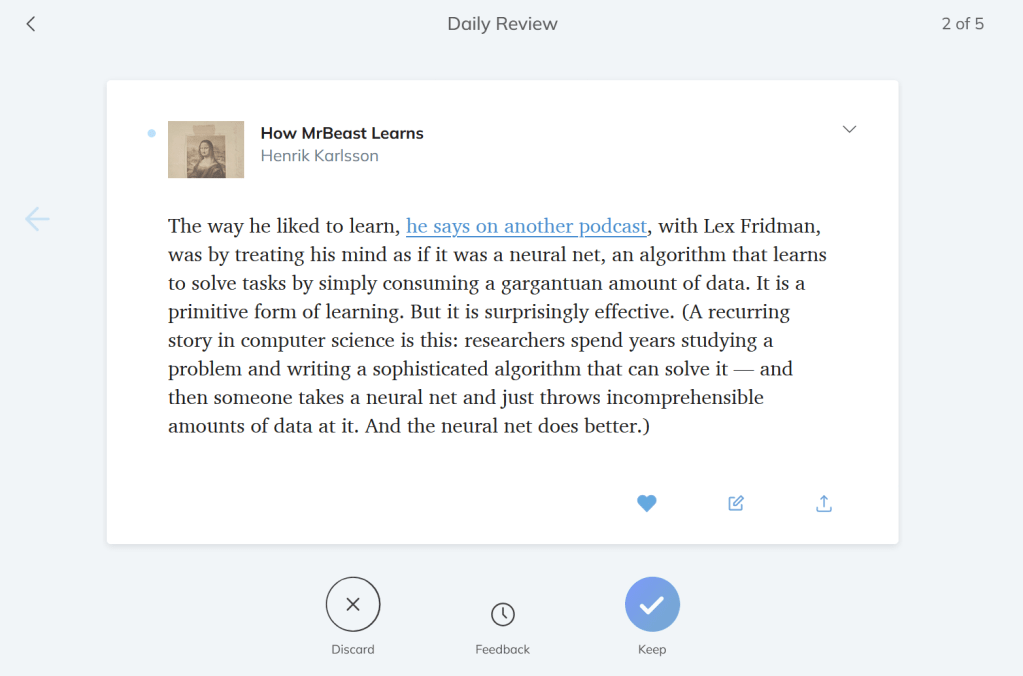
Over the next few days, I noticed how the reviews not only helped me retain information but also encouraged me to reflect on what I had read. This process strengthened my connection with the material I consumed.
Although I had to adjust my reading habits to fit Readwise, the effort was worth it. By turning my highlights into notes and incorporating them into my daily reviews, I finally experienced the full value of the tool.
Reflections from My Readwise Trial
A trial’s success depends on more than just the product itself. The extended trial allowed me to discover Readwise’s value—something I missed during my first attempt. Even if I had concluded that highlighting didn’t suit my routine, the trial would still have succeeded because it enabled me to make an informed decision.
This experience taught me that trials aren’t just about delivering value—they’re about ensuring users perceive and understand that value. This distinction is crucial for evaluating trial outcomes and emphasizes the importance of analyzing user interaction during the trial period.
To explore this concept further, let’s look at the Value Perception Matrix.
Value Perception Matrix
The Value Perception Matrix can be used as a framework for evaluating the outcomes of subscription trials by analyzing the alignment between a product’s actual value and the user’s perception of it.
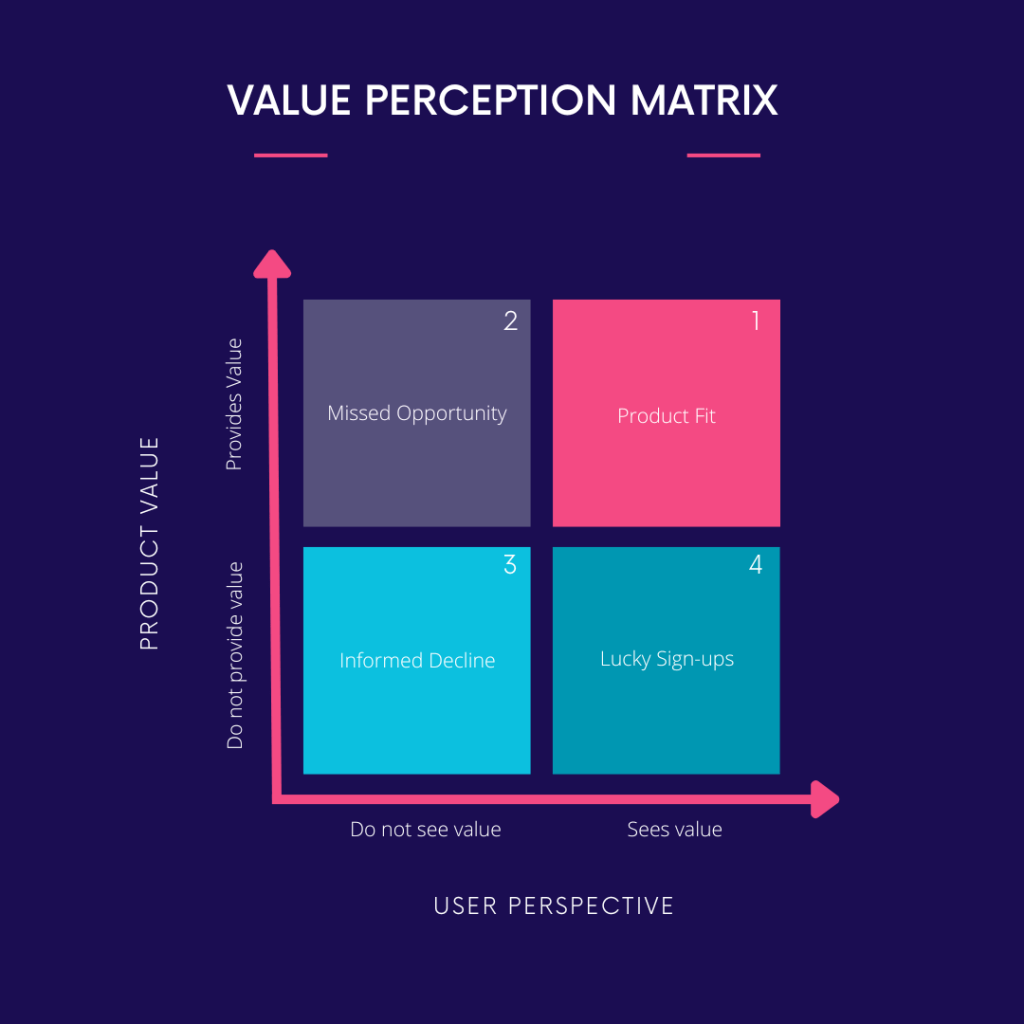
It categorizes trial users into four distinct quadrants:
- Q1 – Product Fit: The product delivers value, and the user perceives it—this is the ideal outcome.
- Q2 – Missed Opportunity: The product delivers value, but the user fails to perceive it—pointing to gaps in onboarding or engagement.
- Q3 – Lucky Sign-Ups: The user perceives value, but the product doesn’t deliver—these users are likely to churn.
- Q4 – Informed Decline: The product doesn’t deliver value, and the user recognizes this—avoiding dissatisfaction.
Successful trials are designed to maximize Q1 and Q4 while minimizing Q2 and Q3. One critical factor in achieving this balance is time—a resource that plays a key role in shaping how users perceive and experience a product’s value. Let’s explore strategies companies can use to determine the ideal trial duration.
Having a Longer Trial
Longer trials may seem like an obvious way to maximize conversions by giving users more time to evaluate a product. However, there are trade-offs—delayed revenue and higher acquisition costs, as companies must support non-paying users for extended periods.
For example, Spotify Premium offers a standard 1-month trial and occasionally extends it to 3 months during promotions. While 3 months may seem unusually long, Spotify’s freemium model makes it a viable strategy. Since the ad-supported free tier already incurs operational expenses like streaming infrastructure and licensing, the incremental cost of offering premium features is minimal. This flexibility allows Spotify to sustain longer trials without significantly increasing overall costs.
That said, longer trials aren’t always feasible or effective. Let’s explore other strategies for optimizing trial duration when extending the length isn’t an option.
A/B Testing Trial Durations
For any trial, the percentage of sign-ups and declines post-trial is straightforward to measure. However, understanding user behavior and identifying missed opportunities (Q2) or lucky sign-ups (Q3) requires an iterative approach. Companies can adjust trial lengths gradually, measure key metrics like sign-ups, declines, and churn, and gather customer feedback to infer the likely distribution of users across the Value Perception Matrix quadrants.
For example, consider the following data:
| Trial Length | 7 Days | 14 Days | 30 Days | 45 Days |
|---|---|---|---|---|
| Product Fit (Q1) | 20% | 25% | 39% | 40% |
| Missed Opportunity (Q2) | 40% | 36% | 24% | 22% |
| Informed Decline (Q3) | 35% | 32% | 34% | 36% |
| Lucky Sign-Ups (Q4) | 5% | 7% | 3% | 2% |
| % Sign-ups | 25% | 32% | 42% | 42% |
| % Declines | 75% | 68% | 58% | 58% |
Based on this data, a 30-day trial might be optimal, as extending to 45 days shows minimal improvement in Product Fit (Q1) or overall sign-ups. This balance ensures enough time for users to discover value without increasing acquisition costs unnecessarily.
Natural Frequency of Usage
Running elaborate experiments with multiple trial lengths can be time-consuming and resource-intensive. An alternative strategy is to design the trial duration around the natural frequency of usage—how often a typical user engages with your product. This approach ensures users have enough time to experience the product’s value without overextending the trial.
For example:
- Nutracheck, a calorie tracking and food diary app, offers a 7-day trial because it’s expected to be used daily.
- Canva provides a one-month free trial, reflecting its lower frequency of usage and the time users might need to complete creative projects.
Understanding your product’s usage patterns is critical for designing a trial that aligns with the user journey. A mismatch between the trial period and the product’s natural usage cadence can frustrate users, causing them to abandon the tool before fully exploring its benefits.
For companies unable to run extensive experiments, the natural frequency of usage offers a practical baseline for deciding trial lengths.
Time to Value (TTV)
While Natural Frequency of Usage focuses on how often users engage with a product, Time to Value (TTV) shifts the focus to when users experience the product’s benefits. For products with longer usage cycles or more complex workflows, understanding TTV ensures that the trial duration provides enough time for users to reach their value moment—the specific action or feature that delivers clear value.
To design trials around TTV, product managers estimate the average time it takes for users to achieve the value moment and align the trial length accordingly. This also involves mapping the steps leading to the value moment and identifying potential drop-offs where users abandon the process.
Examples:
- For Canva, the value moment occurs when a user clicks the share or download button after creating an image. Estimating how long it takes the average user to reach this point can guide trial length decisions.
- Products with complex workflows, like ClickUp, often customize onboarding to accelerate users’ journey to the value moment, ensuring they experience the product’s benefits early.
If a trial expires before users reach their value moment, they may never realize the product’s potential, leading to a Missed Opportunity (Q2). Designing trials with TTV in mind ensures users have enough time to explore and benefit from key features, while also ensuring that declines are informed decisions.
Time to Value Realization (TTVR)
While Time to Value (TTV) marks when a user experiences a product’s benefits, Time to Value Realization (TTVR) captures when they recognize that those benefits are forthcoming. TTVR typically occurs before TTV, making it a more reliable indicator of trial success and a critical factor in optimizing trial duration.
Examples of TTV and TTVR:
| Product | Value Moment (TTV) | Value Realization Moment (TTVR) |
|---|---|---|
| Duolingo | Understand a word or sentence in the language you are learning | Complete a daily exercise or quiz |
| Spotify Premium | Switching between songs without ads | When a user feels the freedom of uninterrupted music is worth the premium |
| Canva | Download a completed image | Find a template or shape to use |
Why TTVR Matters
Users who reach their Value Realization Moment are more likely to subscribe, even if they haven’t fully experienced the product’s benefits. For example:
- In my experience with Readwise, my Value Moment occurred after receiving a few daily review emails, as I began retaining what I had read. However, my Value Realization Moment—when I realized how highlighting and review emails could transform my reading habits—happened earlier during the trial, giving me the confidence to subscribe.
- With Netflix, the Value Moment happens immediately when users start streaming content, but Value Realization often occurs before users sign up. This pre-trial realization made it logical for Netflix to discontinue free trials.
Tracking Value Realization Moments helps PMs design trials that guide users toward TTVR by:
- Extending trials for users who haven’t reached TTVR.
- Sending personalized emails or notifications to highlight unused features.
- Creating onboarding flows and tutorials to accelerate TTVR.
By aligning trials with user behavior and ensuring TTVR happens before the trial ends, companies can maximize conversions and optimize trial duration.
Final Thoughts
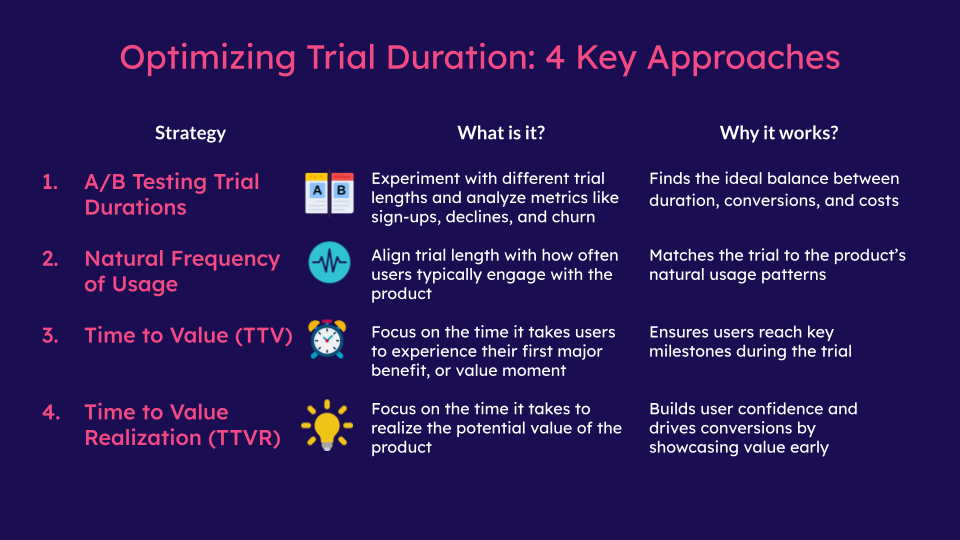
Designing an optimal trial isn’t about picking an arbitrary length—it’s about crafting an experience that aligns with user behavior, product value, and decision-making processes. By leveraging insights from the Value Perception Matrix, natural frequency of usage, and the concepts of Time to Value (TTV) and Time to Value Realization (TTVR), Product Managers can create trials that guide users toward either adoption or an informed decision to opt out.
A successful trial ensures that users either see the product’s full value and subscribe or confidently decide it’s not the right fit for them. Both outcomes represent success, as they ensure a transparent and mutually beneficial relationship between the user and the product.
My experience with Readwise demonstrated how pivotal TTVR can be in trial design. By identifying Value Realization Moments and adjusting workflows to help users reach them sooner, PMs can segment their audience, tailor onboarding, and accelerate time to value. These adjustments not only enhance the trial experience but also build user confidence, improving conversions and long-term satisfaction.
Ultimately, the difference between a failed trial and a successful conversion often lies not in the product itself but in the time and guidance users are given to uncover its value. For me, an additional 30 days turned Readwise from an overlooked tool into an indispensable part of my learning workflow—a testament to the power of thoughtful trial design.

Leave a comment