


Mission-driven platforms like Too Good To Go, Olio, and Oddbox face unique constraints that limit their ability to replicate the growth of food delivery giants. This article explores how these constraints shape their product decisions and growth strategies
In 2023, Too Good To Go reached the milestone of saving 200 million meals from going to waste since its inception in 2016[1]. This is an impressive achievement, especially considering that the latest 100 million meals were saved in under 1.5 years—five times faster than the first 100 million.
According to its CEO, Mette Lykke, this growth stems from the essence of Too Good To Go’s concept: a clear win-win-win. Consumers obtain quality food at a lower price, partners gain exposure to new customers while profiting from food that would otherwise be wasted, and together, everyone contributes to reducing food waste[2].
However, while platforms like Too Good To Go have made a meaningful impact in reducing food waste, their growth is modest compared to that of major food delivery giants such as DoorDash, Grubhub, Zomato and Deliveroo. The UK’s delivery giant Deliveroo has delivered around 300 million orders in 2023 alone[3].
These dominant platforms have achieved their success by investing heavily in user and merchant acquisition, scaling supply and demand simultaneously, and creating a virtuous cycle of growth. In contrast, services like Too Good To Go, Olio, and Oddbox face unique constraints that prevent them from adopting the same aggressive playbook.
This article explores why these mission-driven platforms cannot simply replicate the growth tactics of food delivery giants. Using Too Good To Go as a case study, I will explore how their operating models differ from traditional delivery apps, and how these unique constraints shape product decisions and growth strategies.
Too Good to Go: A Mission-Driven Marketplace
Too Good to Go (TGTG) was founded with a mission to tackle the global issue of food waste. Currently, one-third of all food produced worldwide ends up in landfills, creating significant economic and environmental challenges for the food industry and directly impacting restaurant margins. TGTG addresses this problem by connecting customers with restaurants and stores offering surplus, unsold food.
At first glance, TGTG might seem like just another marketplace linking restaurants and users, much like traditional food delivery platforms. However, its operating model is fundamentally different and poses unique challenges:
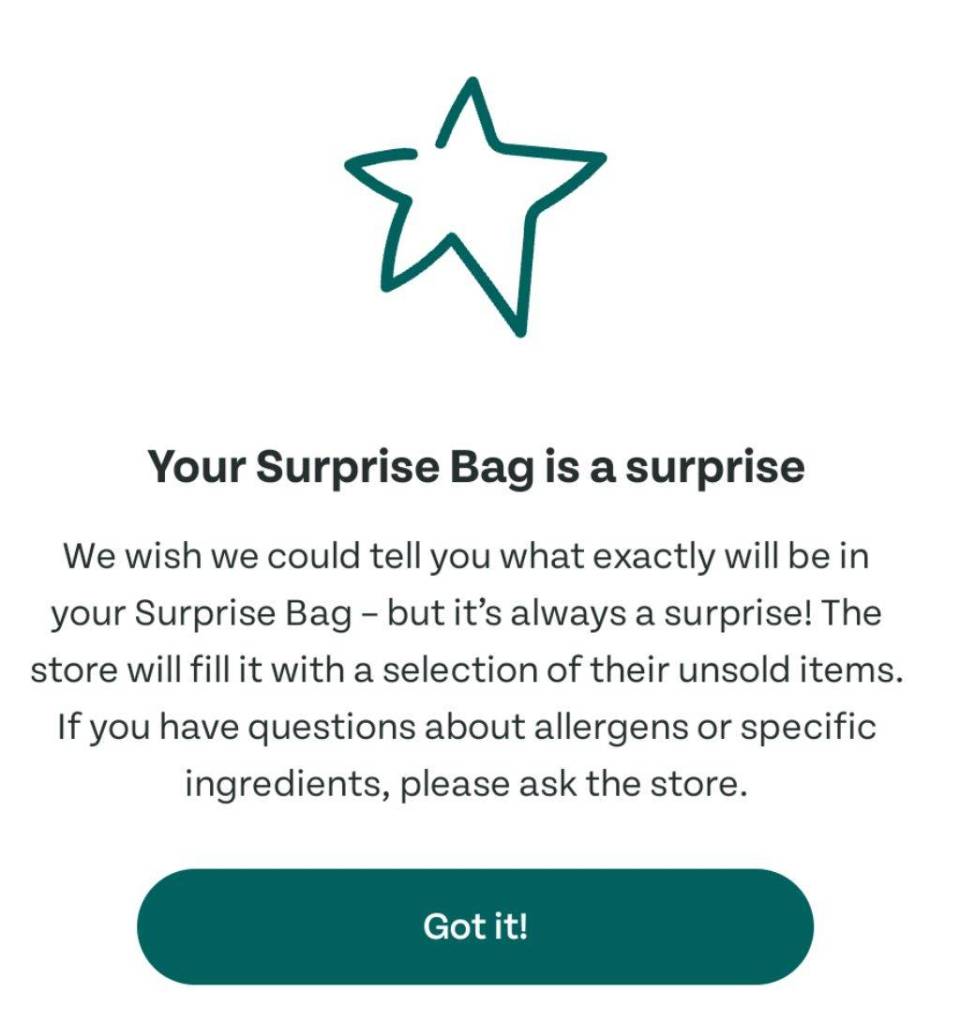
- Unpredictable Inventory: Given the nature of unsold food, TGTG cannot guarantee users what they will receive in advance. For example, a user might receive a bag containing a variety of bakery items or prepared meals. This unpredictability may frustrate some customers, as they do not know what they will receive ahead of time.
- Merchant Onboarding: Since TGTG deals with unsold inventory, it relies on heavy price discounts to attract customers. Despite the lower revenue potential compared to other platforms, TGTG must remain appealing to merchants.
- Scaling the Marketplace: Traditional marketplaces grow by scaling supply and demand in tandem, but TGTG operates in a “surplus-driven market”—where supply is inherently capped by the amount of unsold inventory at each restaurant. Unlike other platforms, TGTG cannot simply increase supply; producing more surplus food would contradict its mission of reducing waste.
The following sections will explore how TGTG navigates these challenges, creating a growth model that prioritizes sustainability while scaling a surplus-driven marketplace.
Embracing Constraints: Designing for a Surplus-Driven Market
A closer look at TGTG’s design and operations reveals how the platform turns its constraints into opportunities. From crafting user experiences that reflect its mission to simplifying merchant onboarding and redefining growth metrics, TGTG embeds its mission into every aspect of its product and operations.
1. Making the User Part of the Mission
One of TGTG’s standout design choices is how it transforms users into active participants in its mission to reduce food waste. The user journey on TGTG differs significantly from other food delivery apps. Instead of ordering specific items on demand, users reserve “surprise bags” of unsold food from restaurants and stores in advance. These bags, offered at a lower price, appeal to deal-seekers and price-conscious customers willing to trade choice and convenience for savings.
TGTG frames this transaction as an environmentally positive action. Users aren’t just buying surplus food—they are “saving” it from going to waste. The platform reinforces this narrative by:
- Branding the packages: Calling them “surprise bags” creates a sense of anticipation and adventure.
- Empowering users: Referring to them as “heroes” who contribute to reducing food waste.
- Highlighting impact: Tracking and displaying the environmental impact of user actions, such as how much food has been saved.
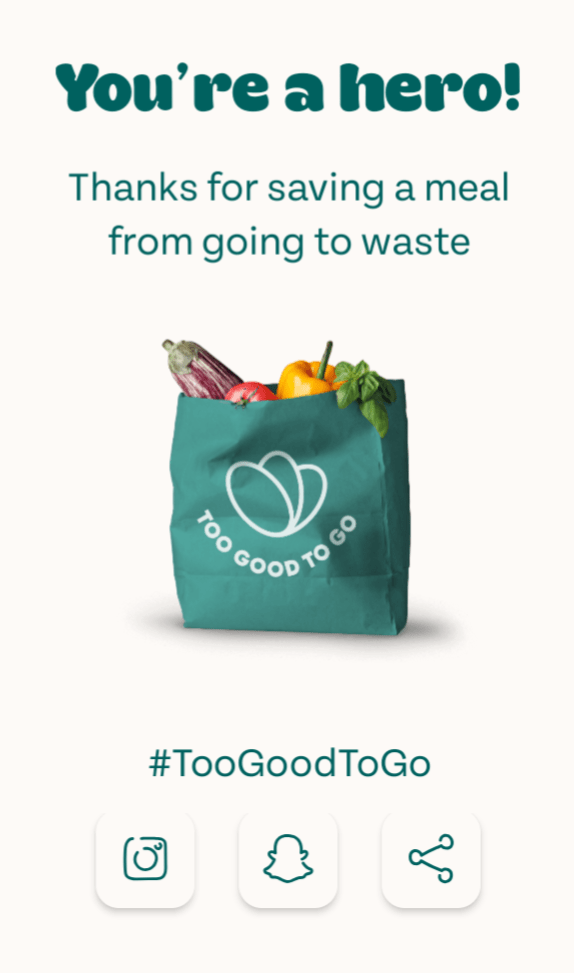
This approach turns what could feel like a compromise into a mission-driven, feel-good activity. The design reinforces this ethos even in small details, such as celebrating when inventory sells out—not as a missed opportunity, but as evidence of successfully reducing food waste.
Additionally, TGTG provides customers with general categories (e.g., vegetarian, bakery items) so they have a reasonable expectation of what they might receive, reducing potential frustration. By clearly communicating the element of surprise as part of the experience, TGTG transforms uncertainty into a selling point. Users are encouraged to see themselves as part of an environmentally conscious adventure, making each meal an unexpected discovery.
While users play a central role in TGTG’s mission, the platform’s success also depends heavily on merchant participation.
2. Simplifying Merchant Participation
Merchant participation is crucial for the success of TGTG, and the strategies below reflect TGTG’s emphasis on simplicity and accessibility to attract merchants.
Making the onboarding interactive
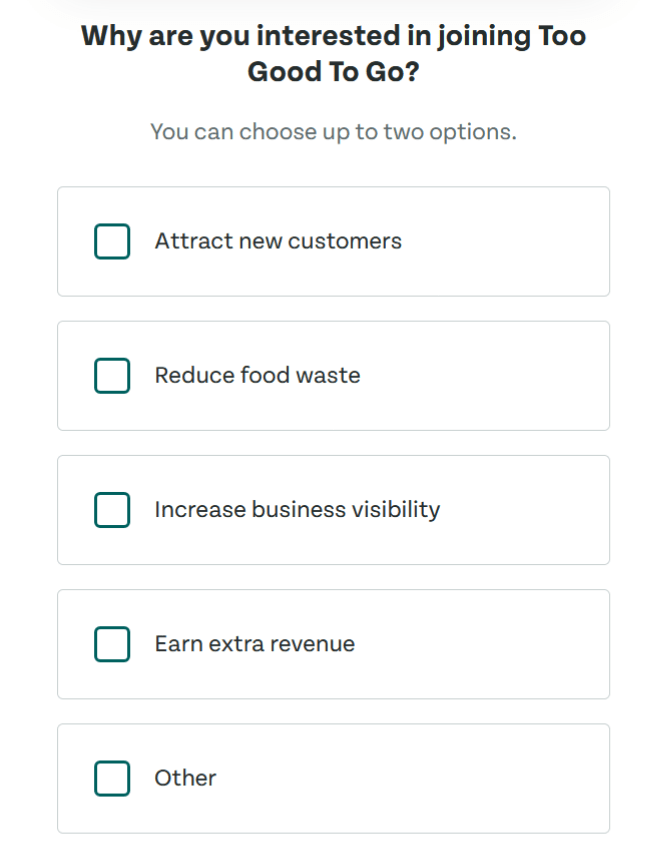
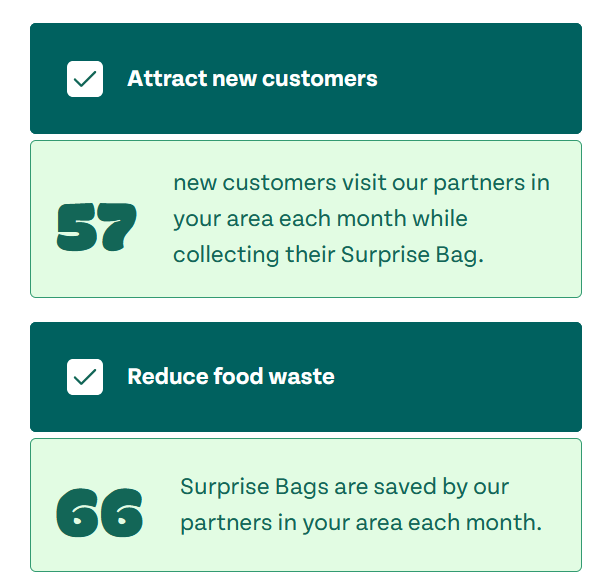
TGTG’s onboarding process for merchants stands out with its design that helps merchants quickly grasp the value of joining the platform. The onboarding begins with a simple, engaging question about why the merchant is interested in joining TGTG, offering multiple-choice options. Depending on the reason selected, merchants are shown relevant statistics to illustrate potential benefits. For instance, if a merchant selects “attracting new customers,” they might see: “57 new customers visited partners in your area when collecting surprise bags.”
Offering simplified inventory management
The concept of “surprise bags” simplifies setting up and managing the left-over inventory on the platform for merchants. To start selling on TGTG, merchants should pick the food category they typically have surplus of and get started in 3 steps:
- Choose the size of the surprise bag (small, medium, or large)
- Set the daily number of surprise bags available
- Set a weekly pickup schedule
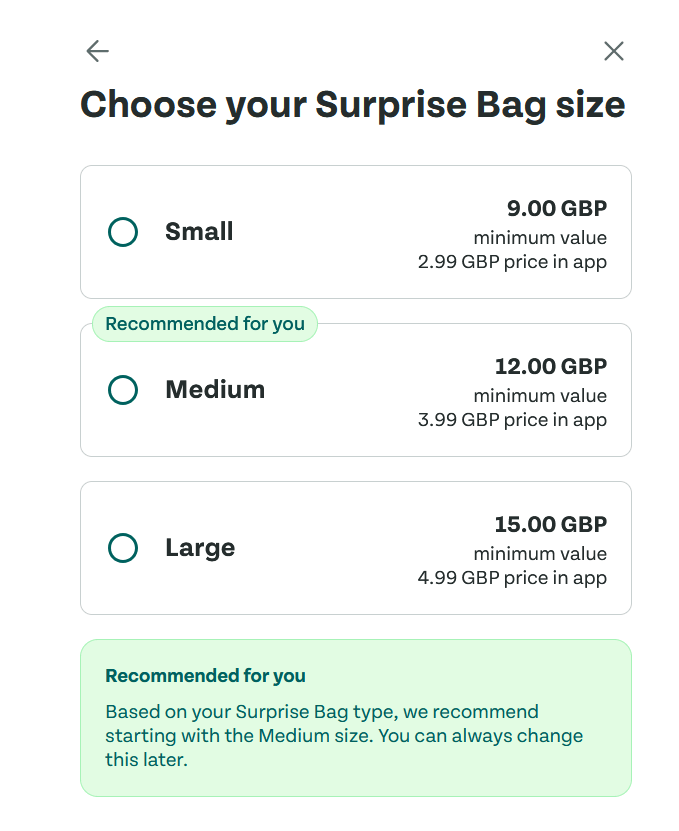
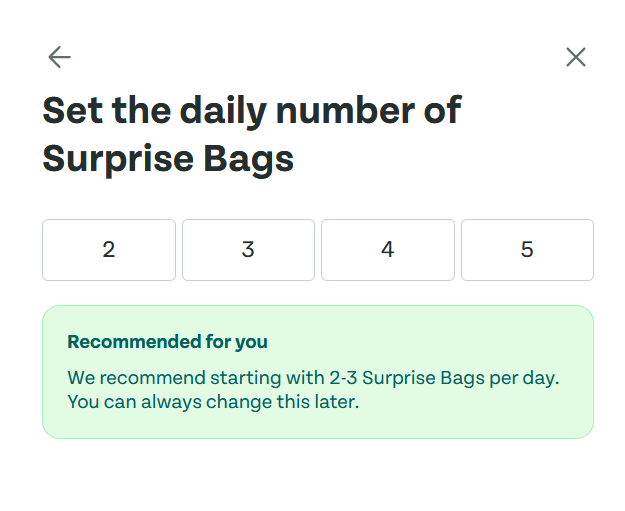
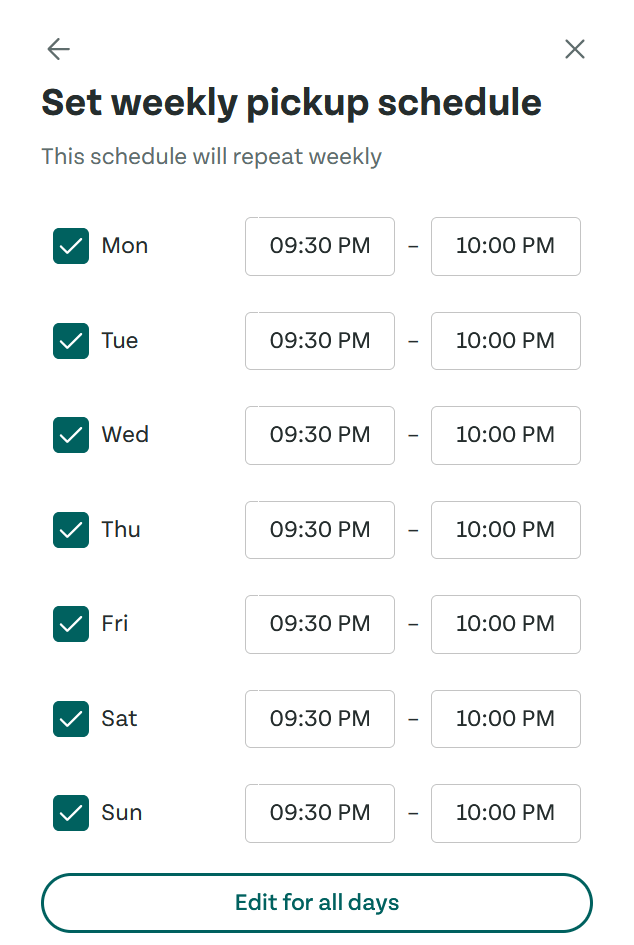
These steps show that TGTG doesn’t need to know the menu or require merchants to synchronize individual food items in real-time. Merchants can estimate their typical amount of surplus food and adjust accordingly, which reduces operational burden and makes participation easy. The bags also serve as a feedback loop, helping merchants better estimate their food wastage.
Creating Up-sell Opportunity with Zero Upfront Cost
Surprise bags are picked up during off-peak or closing hours, driving customer traffic during slower periods. When customers arrive for their surprise bags, they often make additional purchases, generating supplementary revenue. By bringing in customers during traditionally quiet hours and encouraging additional purchases, merchants can boost their sales, effectively turning surplus pickup into a valuable revenue channel. Additionally, there are no upfront costs for merchants to join, making participation on the platform an easier decision.
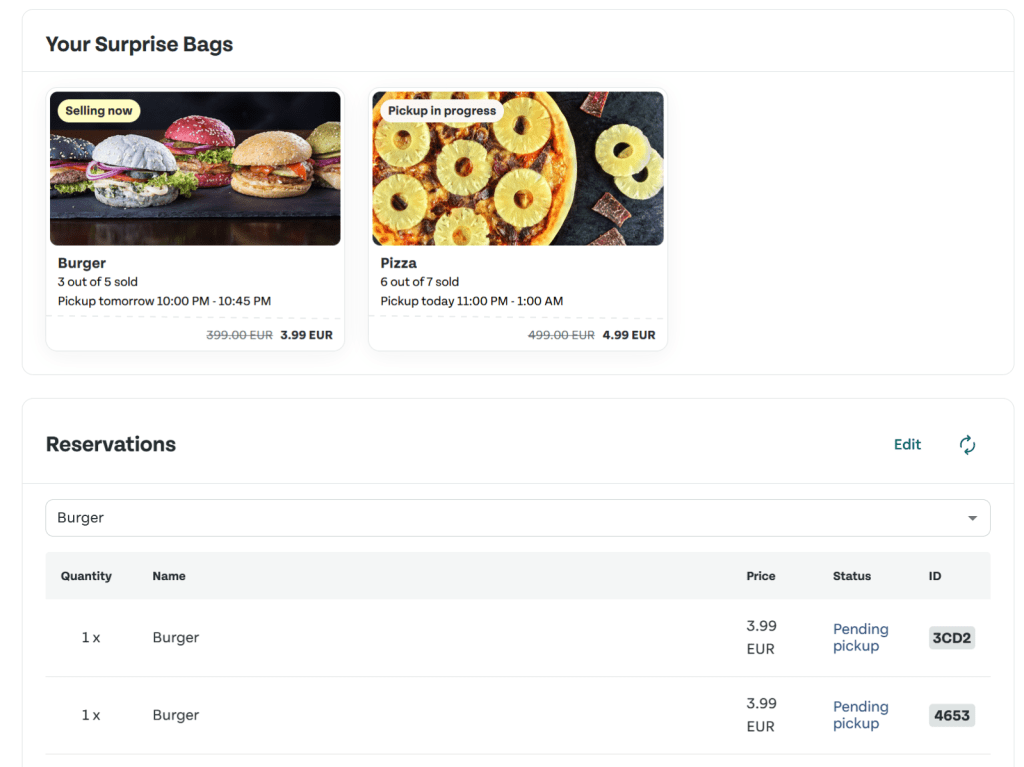
Implementing a Merchant-Friendly Redemption Process
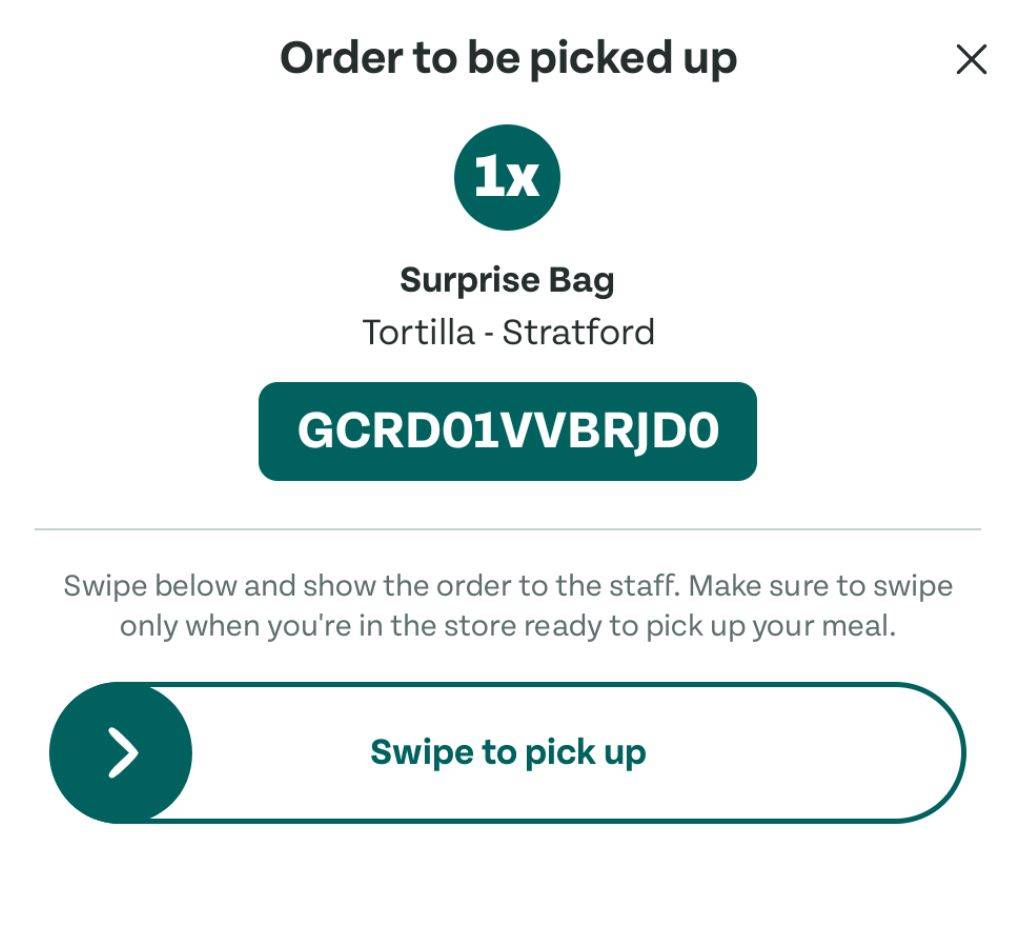
TGTG’s redemption process is designed specifically for merchant convenience. When customers collect their surprise bags, they swipe a code sent to their app during the pick-up window. This step instantly confirms the order, eliminating the need for merchants to manually check their dashboard or worry about code misuse.
These strategies demonstrate how TGTG lowers the barriers to merchant participation, keeping the platform attractive and easy to use.
3. Scaling the platform: Solving the Distribution Challenge
While effectively attracting both users and merchants, Too Good To Go faces a unique scaling challenge. Traditional marketplaces scale by focusing on increasing transaction volume, regardless of how that volume is achieved. TGTG, however, cannot generate more surplus food without compromising its mission to reduce waste. Thus, scaling for TGTG requires redefining “growth” through effective distribution of the existing volume.
TGTG’s primary goal is to ensure every surplus item finds a buyer. Unlike traditional delivery models, adding more users doesn’t directly drive orders for existing restaurants but instead supports onboarding new merchants by ensuring demand is available. This means TGTG scales by spreading orders across many merchants rather than concentrating them among a few.
A key part of TGTG’s growth strategy is partnering with diverse businesses—such as restaurants, bakeries, cafes, grocery stores, and hotels—to capture varied surplus patterns and expand the range of food available. This diversity creates a natural spread of pick-up times throughout the day, accommodating various user schedules and increasing the likelihood that surplus food will find a buyer. This approach maximizes convenience for users and reduces waste efficiently.
Focus Metrics for Measuring Success
What does success look like for a platform focused on reducing waste rather than driving consumption?
The North Star Metric for Too Good To Go (TGTG) is similar to that of other food delivery platforms—Weekly Active Buyers (WAB): The number of users who make at least one purchase per week. WAB is critical because it indicates consistent user engagement, reflecting how often users participate in the platform’s mission of saving surplus food. However, to better understand the platform’s efficiency and effectiveness, two additional metrics are essential:
- Number of Unsold Surprise Bags: This metric indicates how effectively TGTG is matching surplus to demand, with fewer unsold bags signaling better efficiency in reducing waste. Monitoring this metric helps TGTG gauge the effectiveness of its distribution network and make necessary adjustments to reduce food waste further.
- Number of Users Unable to Find a Surprise Bag: This metric measures the number of users who attempt to reserve a surprise bag but fail to find one. It reflects the balance between supply and demand, indicating whether user interest is exceeding available surplus. High numbers in this metric suggest an opportunity for TGTG to expand partnerships, optimize supply, or adjust communication with users to better align expectations with availability.
Tracking these metrics allows TGTG to assess its efficiency in reducing food waste and meeting user demand, thereby aligning growth with its mission. By focusing on efficiency metrics that prioritize reducing waste and satisfying user demand, TGTG can grow sustainably, staying true to its values while expanding its impact.
What’s next for TGTG?
The evolution of TGTG has so far stayed true to its mission, making a meaningful impact by saving countless meals that would have otherwise gone to waste. It exemplifies how a mission-driven marketplace can successfully navigate the unique challenges of operating in a surplus-driven market.
Addressing the problem of surplus distribution at the end of the food chain is a low-hanging fruit, and TGTG has wisely started by solving this issue. However, its focus is now expanding beyond merely connecting surplus food with consumers.
TGTG’s initiatives to address food waste earlier in the supply chain, such as expiry date management tools and dynamic pricing for near-expiry items, demonstrate its progress further up the supply chain. Such innovations empower merchants to better track and optimize inventory, ultimately reducing the likelihood of surplus being generated in the first place.
TGTG’s journey is a powerful example of how marketplaces can evolve based on their operational context and how these contexts drive product decisions. It represents a new generation of marketplaces—ones that scale by redistributing resources efficiently rather than driving excess consumption.
References:

Leave a comment